
 Français
 Deutsch



No longer distant predictions, AI has officially become the “trump card” of the global economy. In the context of a rapidly changing market, businesses that don't adopt AI are very likely to fall behind: slower work processing, difficulty meeting customer expectations, increased operating costs, etc. Meanwhile, competitors can “accelerate” simply through technology. Therefore, AI is no longer just a way to “refresh the image” but has become an essential foundation for businesses to maintain their advantage and break through.
But where is AI “worth the money” and how can it be implemented to produce measurable results? This article will help you clearly see the core values of AI in business, how DFM-Europe implements AI into practical processes, and also clarify a common concern: Will AI completely replace humans or is it just a tool to help humans work better? So let's learn together right below.
Why is AI the "golden key" for business survival in the new era?
According to Gartner, global spending on generative AI is projected to reach $644 billion in 2025, up 76.4% from 2024.
AI is the "key" that helps businesses overcome human limitations in data processing speed and operational optimization. In a market where data is exploding and personalization demands are extremely high, the absence of AI in operational processes is like trying to connect to the world without the internet. Businesses that don't apply AI to their work can not only lose their competitive advantage but also risk being completely "disconnected" from the global value chain.
In summary, in this era, with the irreversible reality that not having AI equates to accepting obsolescence. AI is no longer an option, but a necessity for businesses to keep pace with the market and outperform competitors through operational efficiency. The winning business isn't the one that “uses AI the most” but the one that turns AI into an operational advantage: faster, more accurate, and more scalable.
AI creates a clear advantage: Values that cannot be ignored
-
Increased productivity: AI automates repetitive tasks such as data entry, reconciliation, report summarization, and checklist creation. This significantly reduces processing time, allowing the team to accomplish more with the same resources.
-
Reduce errors: When processes are standardized and run automatically according to "rules," errors due to manual operations are significantly reduced (misspellings, missing files, incorrect versions…). AI can also provide early warnings for anomalies to avoid errors affecting subsequent steps.
-
Cost optimization: Save labor hours, reduce waiting time, minimize rework, and decrease operational waste. In the long run, businesses control their budgets better because they know exactly where costs lie and optimize at the right bottlenecks.
-
Make better decisions: AI helps gather data from multiple sources, clarify the overall picture, and update faster. By analyzing trends and detecting anomalies, management has more basis for making timely decisions instead of relying on intuition.
-
Faster customer response: AI assists with 24/7 request processing, ticket classification, response drafting, and handling suggestions. This reduces response times and consistently improves the customer experience.
-
Personalizing the experience: Based on interaction history and needs, AI helps recommend content, products et services suitable for each customer group. This often increases conversion rates and reduces the “one message for all” situation.
Beyond the obvious benefits, AI also offers “silent” but very important advantages. When applied appropriately, AI helps businesses standardize workflows and improve the consistency of output quality: by applying the same standards, the same forms, and the same testing logic, thus minimizing the situation where each individual handles things differently. AI also helps preserve internal knowledge from being dependent on a few individuals by supporting quick searches for documents, processes, and processing history, turning scattered knowledge into a resource that can be shared with the entire team.
At the management level, AI increases transparency in operations: the steps taken, processing time, and bottlenecks become clearer, helping to optimize in the right places instead of guessing blindly. Furthermore, the organization's responsiveness is also improved because AI can detect anomalies early (incorrect data, incorrect versions, deviations from standards) to issue warnings before these errors affect subsequent steps. In the long run, the biggest advantage isn't just “doing it faster” but also doing it more accurately, learning more quickly and scaling more easily without increasing manpower at the same rate.
Artificial intelligence in business and How DFM-Europe implements it
As more businesses adopt AI, the key question is no longer whether AI is used or not, but what “worthwhile” benefits it truly delivers: saving time, reducing errors, optimizing costs, and speeding up operations.
In companies, AI is not just a Q&A chatbot. In practice, it’s being embedded across the entire operating chain—from data entry and document processing to engineering design and quality control, as well as optimizing logistics, energy, and infrastructure management.
AI optimizes operational performance
In the current management approach, if repetitive tasks are reduced for employees, they will have more time to do more valuable work, and productivity will increase. Automating administrative tasks completely eliminates “dead time” caused by manual operations such as data copying, form filling, or file processing. Thanks to this, the human resources team can focus resources on creative work and bring higher strategic value to the business.
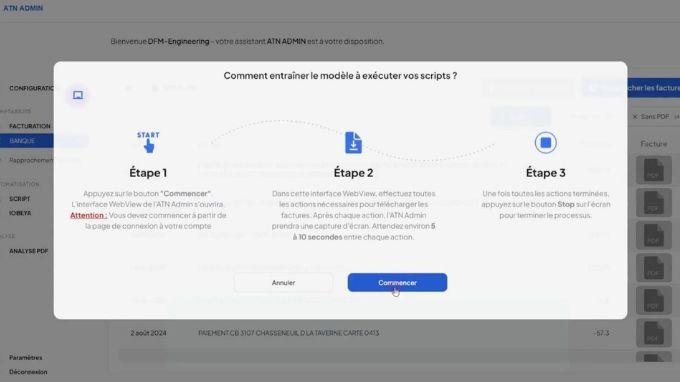
DFM-Europe has assisted numerous clients in automating repetitive technical tasks, particularly with ATN Script. This solution applies artificial intelligence to accurately observe and record computer operation processes, from website login and invoice extraction to system data entry. These processes are then transformed into automated scripts, ready to run independently to replace humans performing complex tasks with absolute accuracy.
Increase accuracy and ensure data standardization
In industrial engineering and manufacturing environments, even the smallest error in the design phase can lead to a cascade of consequences in terms of cost and schedule. Understanding this, DFM-Europe has focused on developing automation solutions to completely eliminate errors arising from manual operations and thoroughly address the problem of “information silos” between management systems. Instead of letting engineers waste time on data entry or file format conversion, our technology ensures perfect synchronization from technical drawings and bills of materials (BOMs) to final quotes, creating a smooth and stable data flow.
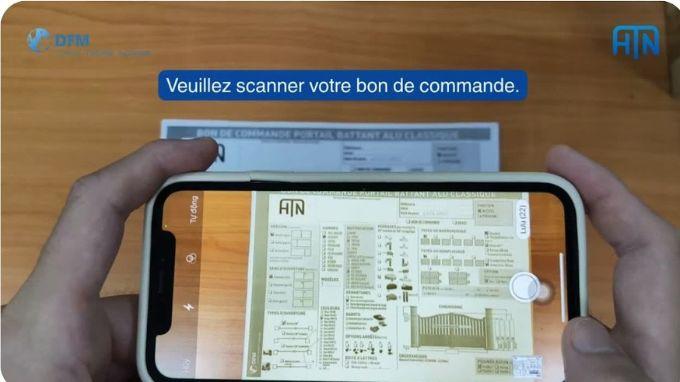
DFM-Europe has partnered with numerous companies in the door and gate manufacturing sector, as clearly demonstrated by the ATN Portail solution. This system possesses full automation capabilities: from reading customer order data and extracting technical specifications to directly creating 3D models in SolidWorks software. The most impressive feature is the ability to generate quotes and BOMs that are instantly synchronized with the company's ERP system. The actual results show that the solution helped reduce design time by 70–80%, while also eliminating errors that often occur due to the lack of connection between the CAD and ERP environments.
Additionally, in fields that demand strict safety standards, such as the energy industry, DFM-Europe's ATN WD solution has brought about a new breakthrough in quality control. By applying artificial intelligence to automatically read and analyze complex piping drawings, the system is capable of accurately detecting and classifying weld symbols to generate detailed data summary tables. This not only speeds up the acceptance process but also completely eliminates the risk of human error, ensuring that all technical information is tracked and absolutely accurate before being used in actual construction.
Breaking Through Time in Construction Design
In the field of construction design, time and accuracy pressures are always a difficult problem for all consulting and construction units. Understanding this challenge, DFM-Europe brought about a revolution in efficiency by shifting the mindset from “hours” to just “a few minutes” in specialized design processes.
The core objective of this solution is not only to increase speed, but also to comprehensively shorten the lifecycle from design ideation and quoting to field implementation. Automating complex processes enables businesses to respond to customers almost instantly, creating a significant competitive advantage while minimizing reliance on manual operations that are prone to human error.
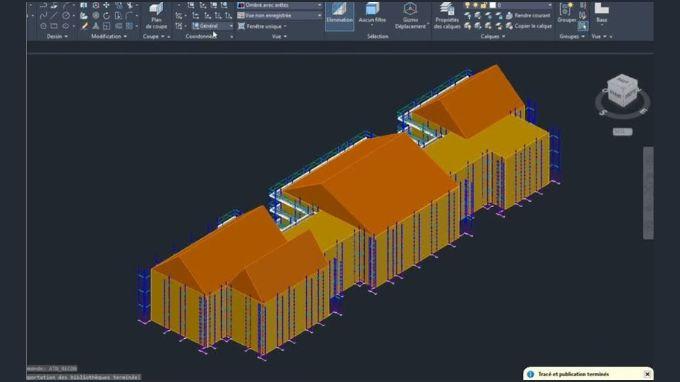
This breakthrough is clearly demonstrated by DFM-Europe through its ATN Scaffolding solution (specifically for the scaffolding sector). Before the intervention of automation technology from DFM-Europe, a skilled engineer would typically spend 4 to 8 hours of highly focused work to complete a detailed scaffold design for a construction project. Now, through an intelligent algorithm system, this process has been shortened to just a few minutes.
This significant time release provides dual value to the business: on the one hand, it allows the engineering team to escape repetitive “drafting” tasks and focus all their intelligence on optimizing construction methods and ensuring the strictest safety standards. On the other hand, the fast processing speed makes the quoting process flexible and professional, helping customers make decisions sooner and thus accelerating the overall progress of the entire construction project.
Smart Management Based on Real-Time Data
In the context of increasingly competitive businesses, the ability to master field data is the key factor that helps businesses transform from a “reactive” to a “proactive” management model. Instead of making critical decisions based on delayed periodic reports or risky “estimated” figures, DFM-Europe's solution provides leaders with an immediate and insightful overview of the entire operational process.
The intersection of the Internet of Things (IoT) and artificial intelligence serves as the “eyes and ears” and “brain” of the factory, not only digitizing the shop floor but also optimizing processes based on the real-time status of each device, ensuring that all interventions occur at the right time and in the right place.
The core benefit of AI is its ability to transform raw data streams from sensors into strategically valuable predictions. Instead of just monitoring, the AI algorithm analyzes operational trends to provide early warnings of potential issues before they can occur. This helps businesses completely eliminate errors caused by subjectivity, replacing them with decisions based on real evidence, thereby thoroughly optimizing production line capacity and saving resources.
The 2IFactory platform is the quintessential solution for this implementation capability of DFM-Europe. This is not just a simple monitoring tool, but an intelligent governance ecosystem that connects the entire system of sensors and IoT devices to a centralized interface. By continuously analyzing data with AI, 2IFactory provides in-depth insights that offer a real-time overview of the system. The ability to “understand” the movement of the production line significantly helps the management team shorten decision-making time, minimize the risk of unplanned downtime, and create a leap in operational productivity.
Optimizing AI-Fair Public Services
In the process of building sustainable cities, technology is not just for “connecting” but also needs to help manage more effectively, optimize costs, and limit environmental impact. DFM-Europe's solution focuses on optimizing operational routes and reducing the number of site visits. By analyzing data from the sensor network, AI supports businesses and governments in real-time monitoring of operations, optimizing inspection schedules, and early detection of anomalies, thereby significantly reducing carbon emissions and contributing to green development goals.
The power of AI is most clearly demonstrated through the ATN Survey project. Here, the process of surveying and managing public infrastructure has been fully automated, eliminating errors from manual operations and speeding up data processing. Specifically, in the context of the public sector always setting high standards for security, DFM-Europe's solution has integrated strict data security protocols, ensuring that residents' information and urban infrastructure are always absolutely protected. This is the solid foundation for cities to transform from traditional governance to a smart, safe, and sustainable ecosystem.
How did DFM-Europe implement AI for its customers?
In reality, AI has the strongest impact when deployed directly at very “ordinary” bottlenecks: repetitive tasks, fragmented data, pressure to accelerate while still maintaining standards. With its projects, DFM-Europe not only provides tools but also accompanies customers from process analysis, data standardization, solution implementation, performance measurement. Here are 3 prime examples from DFM-Europe showcasing how businesses transitioned from manual processes to more efficient operations and design through automation and standardization.
ATN Script
In many businesses, administrative and accounting tasks still rely on repetitive manual operations: downloading invoices, renaming files, storing them in the correct folders, data entry, etc. This consumes hours each period and is prone to errors. The process is also often fragmented across multiple systems, reducing data control and traceability.
With ATN Script, DFM-Europe built a central automation platform based on the principle of "observe - record - reuse": users perform a task once, the system records the sequence of operations and converts it into a script that can be run repeatedly with flexible parameters. ATN-Script can be triggered on a schedule or on demand, and is designed to data sovereignty and security standards.
Thanks to this, businesses significantly reduce the time spent on repetitive tasks, minimize human error, and standardize operational processes. The data is centralized, easier to control and retrieve, helping business teams focus on high-value work while supporting the organization's faster progress on the European standard digital transformation roadmap.
ATN Portail
Before implementing the ATN Portail, the gate design process relied heavily on manual operations: purchase orders (handwritten/scanned) had to have each parameter reentered into SolidWorks. Due to the repetitive port configurations, engineers have to repeat the steps of parameter setup, model adjustment, error checking, and data export multiple times, which is time-consuming, tiring, and increases the risk of errors. Additionally, data is scattered across orders, CAD, and ERP, increasing the risk of information loss.
DFM-Europe, through MyATN-Tech, is implementing ATN-Portail as a technical assistant integrated directly into SolidWorks and connecting related systems. ATN Portail automatically reads orders, extracts data, and inputs it into the design; engineers can adjust parameters as needed. The 3D model is quickly created based on the selected criteria, supporting refinement before publishing the 2D drawing. Simultaneously, the system generates BOMs and quotations, synchronizing with ERP to ensure seamless data flow.
As a result, customers reported a 70-80% reduction in design time, increased productivity due to more efficient resource allocation, and a lower error rate in plans/drawings. Data is centrally managed in an independent environment, compliant with European standards, contributing to shorter lead times and improved cost predictability, thereby enhancing customer satisfaction.
ATN Scaffolding
In the scaffolding industry, project volume is increasing rapidly, but safety requirements are becoming increasingly stringent. Despite using AutoCAD, the scaffolding design process remained heavily manual: engineers had to draw the structure part by part, repeat many operations for similar projects, and manually create a list of materials (pipes, joints, supports, etc.). This method is both time-consuming and prone to errors, making it difficult for engineers to focus on high-value tasks such as structural optimization and technical improvements.
That's why DFM-Europe implemented the ATN Scaffolding solution, a digital assistant integrated directly into AutoCAD to automate repetitive design tasks. The scaffolding modeling system is based on business rules and site parameters, optimizing the configuration according to technical constraints and safety standards, while also checking compliance in real-time. From the model, ATN Scaffolding extracts ready-to-produce 2D drawings and automatically calculates the bill of materials that can be exported to management tools. Engineers still play a central role: reviewing, refining, and validating rather than having to redraw from scratch.
Thanks to this implementation, design time was drastically reduced from 4–8 hours to just a few minutes, significantly boosting productivity and allowing the team to handle 2–3 times more projects within the same timeframe while maintaining quality. The models and drawings are standardized according to internal rules, increasing reliability and reducing the risk of errors. The automated material list helps streamline procurement and limit discrepancies between design and on-site needs. All project data is controlled in a secure environment, meeting the data sovereignty and security requirements of European businesses.
AI supports humans, AI does not replace humans
As AI becomes increasingly prevalent in businesses, the fear that "AI will take away jobs" is completely understandable. But if you look at the true nature of things, AI cannot completely replace humans. AI can do things very quickly, such as processing large amounts of data, synthesizing information, and making suggestions, but AI doesn't understand "what the business goals are" on its own, cannot take responsibility for errors, and is also unable to assess subtle contexts like humans. Important tasks such as setting priorities, considering risks, handling exceptional situations, negotiating, understanding customers' true needs, and making final decisions still require humans to play a central role.
So, the real story isn't "AI replacing humans," but rather AI helping humans work better. AI takes on repetitive and manual tasks, while humans shift to higher-value work such as quality control, process optimization, product improvement, customer service, and data-driven decision-making. Businesses that implement AI correctly will see productivity increase not because of staff cuts, but because of reduced time waste and standardized work methods.
Since humans are still at the center, AI should be seen as a productivity lever rather than a "replacement." But leverage only works when placed at the right fulcrum: the right process, the right data, the right roles, and with control mechanisms in place. Otherwise, AI will only remain at the experimental stage or produce results that are fast but unreliable. From this, the following important lessons can be drawn to use AI both effectively and for sustainable productivity gains.
From this, important principles can be drawn for businesses to use AI both effectively and for sustainable productivity gains. The starting point should be a very specific business goal: reducing processing time, decreasing operational errors, speeding up customer response, or standardizing output quality. If AI is implemented just because "everyone else is doing it" or to have a nice technology project, businesses can easily fall into a state of prolonged experimentation that is time-consuming but difficult to produce clear changes. In other words, the key is not choosing the "best" AI tool, but choosing the right task that is causing the most waste and whose effectiveness can be measured after implementation.
Once the goal is clear, the next step is often not "pouring AI into everything," but rather clearing the path with processes. AI cannot turn a messy process into a neat one if the business itself hasn't agreed on how to do things. When the input is non-standardized, documents from each department are saved in different formats, person A does it one way, person B does it another, AI will produce results quickly but they will be unreliable and even more difficult to control. Therefore, effective AI implementation often comes with a standardization step: unifying forms, naming conventions, approval workflows, and setting output quality criteria. The clearer the process, the more AI becomes a true accelerator rather than adding to the chaos.
Alongside the process is the data story – the foundation of every "productivity lever." AI can quickly summarize and provide intelligent suggestions, but if business data is missing, incorrect, outdated, or lacks context, AI can easily "fill in the gaps" with speculation. This is particularly sensitive in content related to technical, legal, financial, or customer commitments. Therefore, businesses need to clearly identify the official information sources, how the data is updated, who is responsible for its accuracy, and how access is tiered. Only when the data is "correct and responsible" will AI generate speed with reliability.
To ensure speed doesn't compromise quality, the control mechanism must be designed from the outset: AI suggests, humans decide. Most of the value of AI in business comes from reducing manual tasks and speeding up processing, rather than completely replacing responsibility. Therefore, it is necessary to clearly define which tasks can be automated, which require human approval, and what the inspection standards are. A reasonable approach is "human-in-the-loop": humans are positioned at key points to verify information, handle exceptions, consider risks, and be responsible for the final decision. When this mechanism is clear, AI both helps increase productivity and doesn't make businesses sacrifice customer and internal trust.
Finally, for sustainable productivity gains, AI needs to be viewed as a change in the way we work, not just a new tool. The team needs guidance on how to make correct requests, how to check the output, and how to use AI as a "speeding-up assistant" rather than a "replacement worker." At the same time, effectiveness should be measured using specific indicators such as processing time, error rate, response speed, customer satisfaction level, etc., and then improved iteratively. When AI is placed on the right "fulcrum" – the right goals, the right processes, the right data, and the right control mechanisms – the narrative will no longer be "AI takes jobs," but rather "AI upgrades how we work": humans focus on the higher-value aspects, while AI handles the repetitive tasks to make organizations operate faster, more accurately, and make better decisions.
When AI is placed in the right place and used correctly, businesses will see a very clear result: increased productivity, reduced errors, smoother operations, and more time for humans to focus on value creation.

CONCLUSION
In summary, AI is not a “feature” for companies to try out of curiosity, but a new capability that improves performance and creates a competitive advantage. However, benefits only appear when AI is applied in the right place: tackling the right bottleneck, measuring impact, and scaling with a clear roadmap.
In practice, AI works best when it starts from a specific use case, aligns with internal processes and data, and meets security/data sovereignty requirements. Companies should define metrics (time, error rate, cost, productivity…), run small pilots, then scale gradually. In other words, there is no “one-size-fits-all” formula—AI’s real power is unlocked when it is embedded into each team and process and delivers measurable results.